
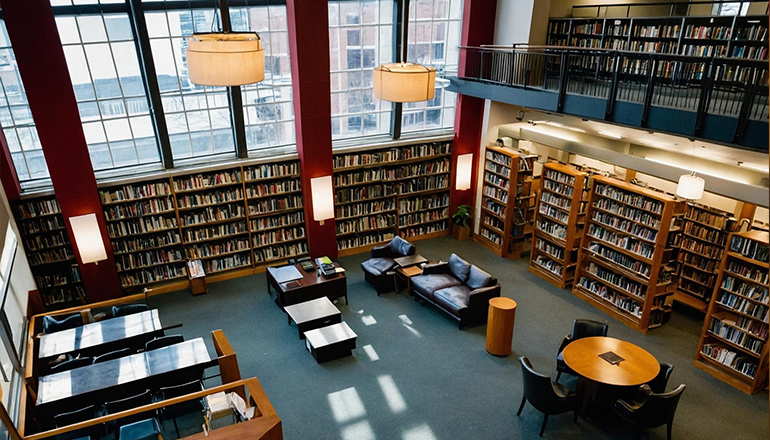
The deterioration of paper-based materials, whether ancient or modern, is caused by environmental, chemical and biological factors that affect paper and bindings over time.
Particularly in professional settings with large collections, preventive risk management plays a central role. In libraries, archives and documentation centres, environmental and operational conditions affect library and archival materials.
Cleaning and dusting, disinfection and sanitisation, and a mindful approach to conservation help to reduce the progressive deterioration of archival and library collections.
Why books and archival materials degrade over time
Books, documents and archival materials are naturally subject to ageing and transformation processes that affect paper, bindings and organic components. The rate of deterioration varies depending on the quality of the materials, storage methods and the stability of the microclimate in archives and libraries.
In addition to these natural processes, there are environmental, biological and operational factors that can accelerate the deterioration of materials. Uncontrolled humidity, temperature fluctuations, exposure to UV rays, dust accumulation, mould, biological infestations and incorrect handling can affect the long-term preservation of collections.
The main causes of deterioration in library and archival collections
The natural ageing of books and documents can be accelerated by external factors. An overview of the main causes of deterioration includes:
- High relative humidity and damp environments
- Temperature fluctuations and an unstable microclimate
- Exposure to UV rays
- Accumulation of fine dust in storage environments
- Presence of mould, bacteria and fungal spores
- Insect infestations and biological proliferation
- Chemical processes linked to the natural ageing of paper
- Acidity of paper, collagen, starch and animal-based glues
- Incorrect handling of books, files and documentary materials
- Inadequate storage conditions on shelves and in repositories
Paper acidity and the ageing of documentary materials
One of the most insidious processes in the conservation of books and documentary heritage is the chemical degradation of paper. Over time, acidity and oxidation processes can progressively alter the structure of paper materials, rendering them brittle, stiff and prone to loss of integrity.
This phenomenon particularly affects many materials produced from the 20th century onwards, characterised by components and production processes that are more sensitive to chemical ageing. In several cases, the paper tends to disintegrate spontaneously over time.
Older documentary materials, produced using different manufacturing processes and less acidic components, may instead exhibit greater long-term stability.
To protect books and limit paper deterioration, it is important to control environmental conditions, reduce exposure to light, dust and humidity, and adopt a continuous approach to preventive conservation.
Dust and dusting in book and archival collections
As discussed in detail in the article on how to clean and protect books from dust, dust is one of the main factors in the progressive deterioration of materials. The accumulation of fine dust on volumes and on shelves can affect the preservation of paper materials, alter air quality in storage environments and encourage biological growth.
For this reason, dust removal forms part of preventive conservation processes and is scheduled periodically, particularly in high-density collection storage areas. The use of filtered vacuum systems and specialised technologies helps to reduce dust accumulation by minimising the handling of volumes and the risks to the preserved materials.
Relative humidity and temperature fluctuations in archival and library materials
Paper is particularly sensitive to changes in the microclimate and temperature fluctuations. In conservation, the reference temperature is around 18°C, with a tolerance of no more than 3°C. More than the absolute temperature, it is sudden changes in environmental conditions that are particularly harmful to books and documents.
Temperature fluctuations cause continuous processes of expansion and contraction in the materials, generating an ‘elastic’ effect which, over time, affects the stability of the paper, bindings, glues and organic components of the volume.
Controlling relative humidity is also a key aspect: uncontrolled humidity levels can lead to warping, damage to materials and conditions conducive to the proliferation of mould, bacteria and fungal spores, particularly in damp or poorly ventilated environments.
Particular attention must also be paid to the drying of volumes. Processes such as sublimation must be managed in a professional and controlled manner, as incorrect treatments can compromise the materials.
UV rays and paper deterioration in books
UV rays accelerate the chemical ageing processes of paper and the organic components present in books, progressively affecting inks, bindings and materials such as collagen and animal glue.
Prolonged exposure to natural or artificial light can cause yellowing, loss of elasticity and alterations to documentary materials, which are often difficult to identify with the naked eye in the early stages. In ancient materials and historical documents, the action of light can also alter the fluorescence and stability of inks over time.
To protect books in conservation environments, shielding systems, controlled lighting conditions and monitoring activities are employed, designed to limit the prolonged exposure of book and archival materials to ultraviolet rays.
Insects, infestations and biological damage in book collections
There are approximately 130 species of insects and mites that are potentially harmful to the conservation of collections. Among the most common infestations in book collections are silverfish, termites, cockroaches, mites and rodents, which can infest paper, spines, adhesives and other organic materials present in the volumes.
Biological infestations can cause erosion, excrement and progressive damage to materials, particularly in the presence of high humidity, dust and environmental conditions favourable to the proliferation of infesting species. Monitoring, inspection and environmental control activities often require the support of specialised staff and industry experts.
Nitrogen treatments in airtight, controlled environments are generally used for pest control operations. Through air filtration systems, oxygen is gradually replaced with nitrogen, creating conditions incompatible with the survival of insects and eggs present in the treated materials.
Nitrogen treatments are used to treat books and documentary materials, but they do not address microbiological contamination or infections present in the volumes.
Infections: mould, microbiological contamination and poorly ventilated environments
In archival and library environments characterised by poor ventilation and uncontrolled air exchange, relative humidity and the microclimate can encourage the development of mould, bacteria and microbiological contamination on stored materials. These phenomena often develop gradually and insidiously, even at a microscopic level, making it necessary to monitor and control environmental conditions.
Disinfection procedures are selected based on the conservation conditions of the materials and the type of contamination. Systems historically used include:
- Ethylene oxide, used in isolated and controlled environments via autoclaves and air filtration systems, due to the gas’s highly reactive nature.
- UV treatments with controlled exposure to avoid damaging paper material sensitive to ultraviolet rays.
- Solutions based on diluted quaternary salts, applied in a manner compatible with paper material to limit the introduction of moisture into the volumes during disinfection operations.
Dedicated systems such as Nebula utilise quaternary salts atomised in a controlled manner via air blades and integrated drying phases, enabling disinfection procedures designed for book and documentary collections without interfering with dusting activities.
Handling of books and conservation risks for collections
Any handling activity can affect the conservation of books and documents. Repeated removal from shelves, internal or external transport for cleaning, relocation of collections and uncontrolled operations subject the volumes to continuous mechanical stress, which over time can compromise their integrity.
In large libraries and archive repositories, the management of thousands of volumes makes this aspect even more critical. The greater the need to move books and files for cleaning, treatment or reorganisation, the greater the risk of wear, deformation and damage to the materials, in addition to the operational and economic impact associated with collection management.
To protect books from this risk, Oracle technologies are designed to operate directly in the vicinity of the shelving, reducing the need to transfer volumes to other operational areas. Bringing the machine to the book rather than the book to the machine makes it possible to limit unnecessary handling, reduce conservation risks and optimise the management, dusting and treatment of collections.